
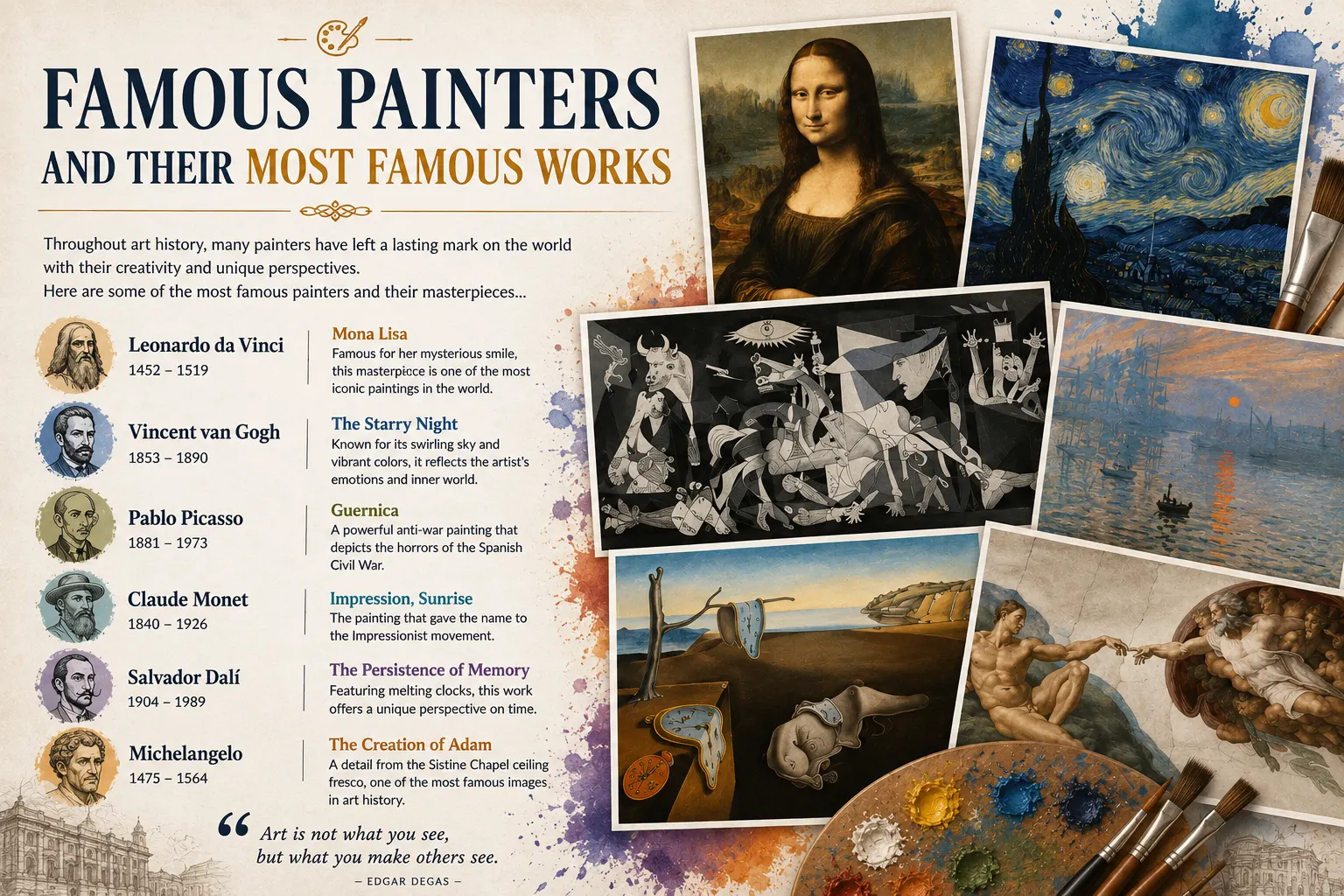
Throughout the history of art, many painters have left a lasting mark on the world through their creativity and unique perspectives. Some transformed the artistic understanding of their era, while others created masterpieces that continue to inspire admiration centuries later. Today, these works are studied by millions of visitors in museums around the world, showcasing the universal power of art. But who are the most famous painters in history, and which works made them legendary? Here is a look at some of the most influential artists and their best-known masterpieces.
Leonardo da Vinci and the Mona Lisa
One of the most important figures in art history, Leonardo da Vinci is widely regarded as one of the greatest artists of the Renaissance. A painter, engineer, scientist, and inventor, Da Vinci was a true polymath whose talents extended far beyond art.
His most famous work, the Mona Lisa, has become one of the most recognizable paintings in the world. Displayed in the Louvre Museum in Paris, the painting is renowned for its mysterious smile and captivating gaze. Every year, millions of visitors travel from across the globe to admire this masterpiece.
Vincent van Gogh and The Starry Night
Dutch painter Vincent van Gogh sold very few works during his lifetime, yet he became one of the most celebrated artists in history after his death.
Among his many remarkable paintings, The Starry Night stands out as his most iconic work. Known for its swirling brushstrokes and vivid colors, the painting offers a unique interpretation of the night sky while reflecting the artist's emotions and inner world. Today, The Starry Night is considered one of the most recognized masterpieces of modern art.
Pablo Picasso and Guernica
Pablo Picasso was one of the most influential artists of the twentieth century and a pioneer of the Cubist movement. Throughout his career, he produced thousands of works and continuously experimented with new artistic techniques.
His most famous painting, Guernica, is a powerful depiction of the horrors of war. Inspired by the tragic events of the Spanish Civil War, the artwork has become one of the most significant anti-war statements in art history.
Michelangelo and The Creation of Adam
Although Michelangelo is often remembered as a sculptor, he also achieved extraordinary success as a painter. His frescoes on the ceiling of the Sistine Chapel in Vatican City are among the most celebrated achievements in Western art.
One of the most famous scenes, The Creation of Adam, depicts the nearly touching hands of God and Adam. This image has become one of the most recognizable compositions in the history of art.
Salvador Dalí and The Persistence of Memory
Salvador Dalí was one of the leading figures of the Surrealist movement. His extraordinary imagination and dreamlike imagery earned him a unique place in the art world.
His masterpiece, The Persistence of Memory, is famous for its melting clocks. The painting challenges conventional perceptions of time and reality, making it one of the most iconic works associated with Surrealism.
Claude Monet and Impression, Sunrise
Claude Monet was one of the founders of the Impressionist movement and is best known for his ability to capture light and color in nature.
His painting Impression, Sunrise is historically significant because it inspired the name of the Impressionist movement itself. The artwork remains one of the defining symbols of Impressionism and continues to influence artists around the world.
Edvard Munch and The Scream
Norwegian painter Edvard Munch created one of the most powerful symbols of modern art with The Scream.
The figure’s expression and the dramatic, swirling background convey intense feelings of anxiety, fear, and loneliness. As a result, the painting has become a cultural icon recognized far beyond the art world.
Johannes Vermeer and Girl with a Pearl Earring
Dutch artist Johannes Vermeer is admired for his mastery of light and meticulous attention to detail.
His most famous work, Girl with a Pearl Earring, is often referred to as the “Mona Lisa of the North.” Despite its simplicity, the painting captivates viewers with its elegance, mystery, and timeless beauty.
Rembrandt and The Night Watch
Rembrandt is considered one of the greatest painters of the Baroque period. He is especially known for his remarkable use of light and shadow in portraiture.
His masterpiece, The Night Watch, is celebrated for its dynamic composition and sense of movement. The painting is widely regarded as one of the greatest achievements of Dutch art.
Conclusion
The masterpieces created throughout art history hold immense cultural, historical, and artistic value. From Leonardo da Vinci and Vincent van Gogh to Pablo Picasso and Salvador Dalí, these renowned painters have enriched humanity’s shared cultural heritage through their extraordinary works. Today, their paintings continue to inspire millions of people worldwide. Through the universal language of art, these masterpieces connect generations and cultures, serving as a powerful bridge between the past and the future.



No comments yet. You can leave the first one.