
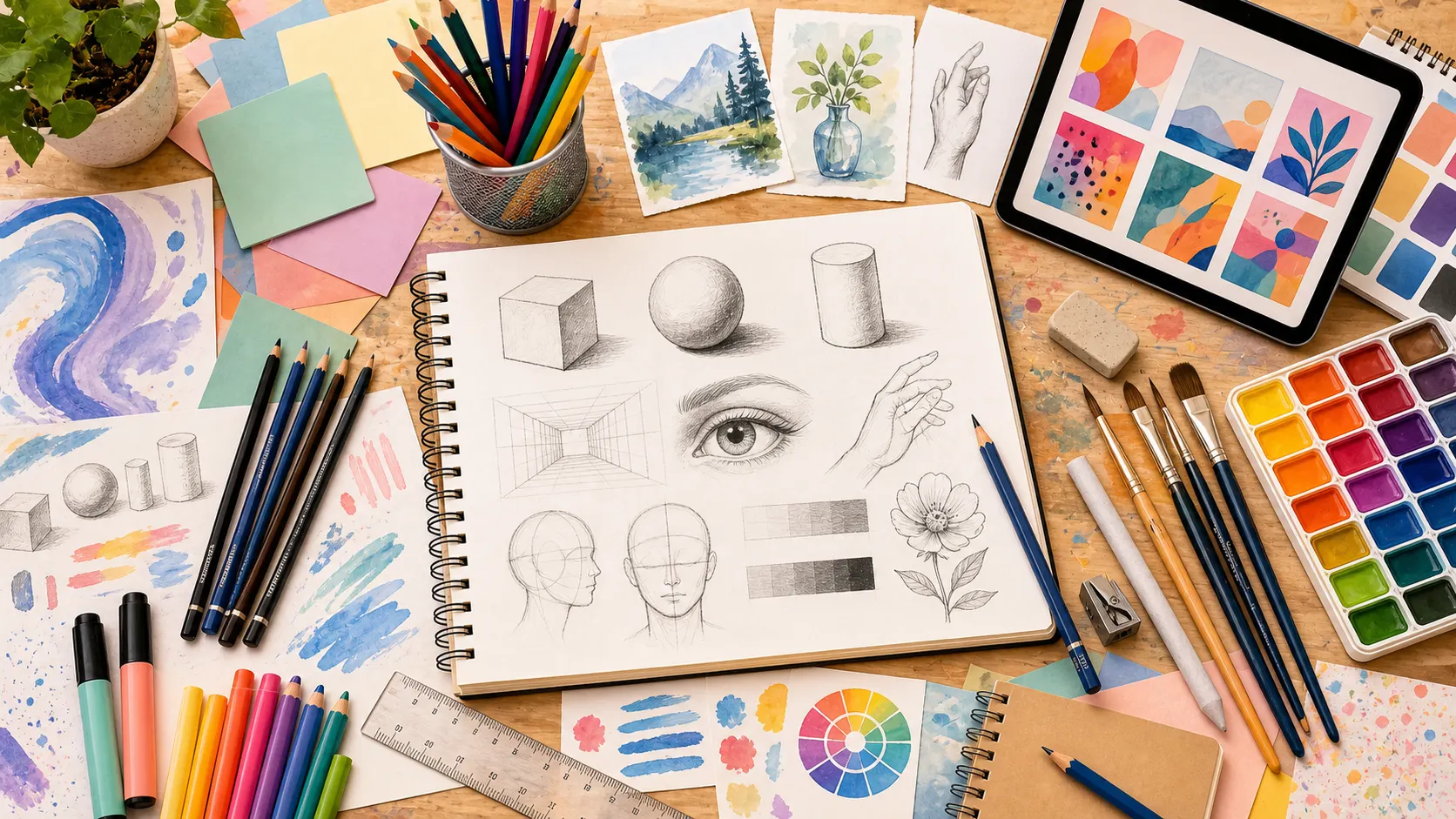
Drawing is not just a talent-based skill; it is a creative process that anyone can develop through consistent practice, careful observation, and reliable learning resources. For those who are new to drawing, knowing where to start can sometimes feel overwhelming. Topics such as pencils, sketchbooks, anatomy, perspective, light and shadow, composition, and digital drawing may seem confusing at first. That is why beginner drawing resources can make the learning process more organized, understandable, and motivating.
Well-chosen resources help beginners recognize common mistakes, learn proper techniques, and gradually develop their own artistic style. In this article, we will explore different types of resources for aspiring artists, from books and online courses to mobile apps and free video tutorials.
Why Is Choosing the Right Drawing Resources Important?
Many beginners start by simply copying what they see. While this can be a useful exercise, it is not enough on its own. Successful drawing combines line control, proportion, understanding of form, perspective, shading, and observation skills. The right resources help learners develop these abilities in a structured way.
On the other hand, resources that are too advanced or unsuitable for a beginner’s level can reduce motivation. A highly detailed anatomy book or a complex digital painting course may feel overwhelming for someone just starting out. Therefore, it is best to begin with simple, practical, and foundational learning materials.
1. Basic Drawing Books
One of the most reliable resources for beginners is a good drawing book. Quality drawing books explain concepts step by step and encourage readers to practice regularly. Topics such as line exercises, geometric forms, simple objects, perspective, and shading can be learned effectively through structured lessons.
Books that focus on “learning how to see” are especially valuable for beginners. Drawing is as much about observation as it is about hand skills. Understanding the true proportions, angles, and lighting of an object forms the foundation of strong drawing abilities.
2. YouTube Drawing Channels
YouTube is one of the most accessible resources for learning how to draw. Its free availability, variety of instructors, and visual demonstrations make it an excellent learning platform. Beginners can find tutorials on pencil techniques, object drawing, portrait drawing, character design, perspective, and shading.
However, it is important to use YouTube strategically. Instead of watching random videos, following a structured learning path is more effective. For example, start with line exercises, move on to basic forms, and then study perspective and light-and-shadow techniques.
3. Online Learning Platforms
Online learning platforms are ideal for those who prefer a more organized educational experience. Drawing courses on these platforms are usually divided into lessons that progress from beginner to advanced levels. Instructor guidance, assignments, example projects, and the ability to rewatch lessons make learning easier.
Online courses can be particularly useful for students interested in figure drawing, digital illustration, character design, or concept art. When choosing a paid course, it is important to review the curriculum, student feedback, and the instructor’s portfolio.
4. Mobile Apps and Digital Tools
Today, learning to draw is no longer limited to paper and pencil. Tablets, drawing apps, and digital pens have made practicing more convenient than ever. Applications such as Procreate, Sketchbook, Krita, and Photoshop are among the most popular tools for digital artists.
Beginners interested in digital drawing should first learn basic concepts such as brush settings, layers, color selection, and simple sketching techniques. However, digital tools should not replace fundamental drawing knowledge. Artists working digitally still need to practice proportions, perspective, and shading.
5. Reference Image Websites
Using references is extremely important when learning to draw. Reference images help artists understand object structures, human anatomy, clothing folds, lighting directions, and color relationships. For beginners, using references is not cheating—it is a natural and essential part of the learning process.
Simple subjects such as everyday objects, hands, eyes, faces, animals, plants, and interior spaces are excellent starting points. When selecting references, choose images with clear lighting, simple compositions, and easy-to-understand details rather than overly complex scenes.
6. Daily Sketchbooks
One of the best drawing resources is your own sketchbook. Regular drawing practice transforms theoretical knowledge into practical skills. Creating short sketches every day improves hand-eye coordination and strengthens line quality.
Beginners should not expect perfect results in their sketchbooks. The goal is not to create masterpieces but to build a consistent drawing habit. Everyday objects such as cups, chairs, books, plants, shoes, hands, and facial expressions make excellent practice subjects.
7. Perspective and Geometric Form Studies
Drawing is built upon simple forms. Learning to draw cubes, spheres, cylinders, and cones accurately makes it easier to understand more complex subjects. For example, a human head can be simplified into a sphere, an arm into a cylinder, and a table into a rectangular prism.
Perspective studies are equally important for drawing environments, architecture, rooms, streets, and objects. One-point and two-point perspective are fundamental concepts that every beginner should learn.
8. Anatomy and Figure Drawing Resources
Drawing the human figure may seem intimidating at first. However, basic anatomy resources can make the process much easier to understand. Instead of memorizing every muscle, beginners should focus on overall body proportions, posture, and movement.
Quick gesture drawings, short pose studies, and simple human silhouettes are excellent exercises for learning figure drawing. Over time, artists can move on to more detailed subjects such as hands, feet, facial features, and clothing.
9. Art Communities and Feedback
Learning to draw alone can sometimes reduce motivation. Joining art communities, sharing work, and receiving feedback can significantly accelerate improvement. Online forums, social media groups, drawing clubs, and workshops are all valuable resources.
When receiving feedback, it is important not to take criticism personally. Constructive comments help artists identify weaknesses and practice more effectively.
Conclusion
Beginner drawing resources provide a strong foundation for anyone starting their artistic journey. Books offer essential knowledge, YouTube videos provide visual instruction, online courses create structured learning paths, apps support digital practice, and sketchbooks help reinforce newly acquired skills.
The most important factors in improving drawing skills are patience and consistent practice. Your first drawings may not meet your expectations, and that is completely normal. What matters is drawing regularly, learning from reliable resources, and recognizing your progress over time. Drawing is not about becoming an expert overnight—it is a creative habit that grows stronger with every sketch.





No comments yet. You can leave the first one.