
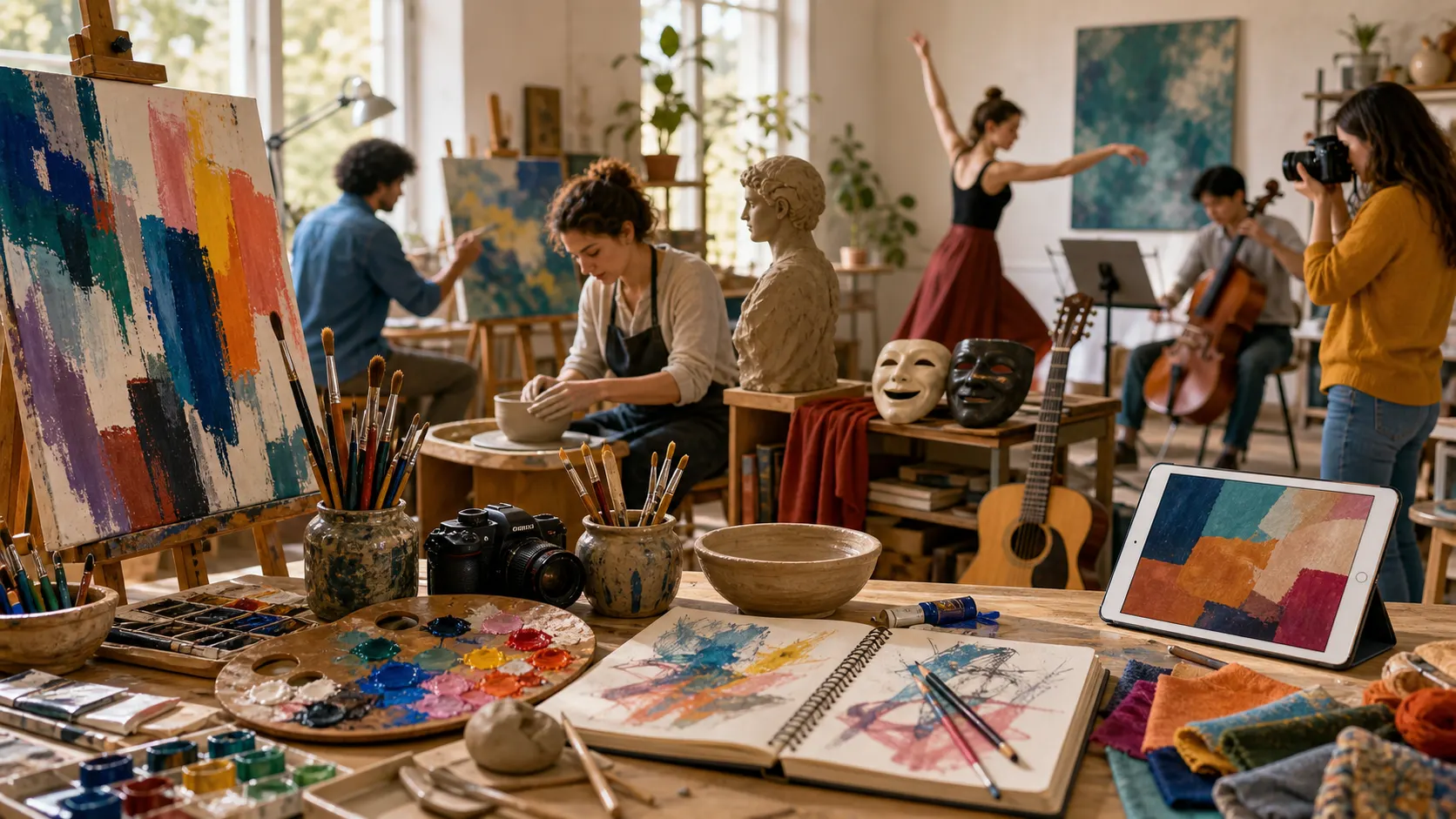
Art is one of the most powerful ways for people to express their emotions, thoughts, imagination, and life experiences. For this reason, the question “what are artistic activities?” is important not only for those interested in art but also for children's development, young people's creativity, adults' self-expression, and the cultural life of society. Artistic activities help individuals reveal their inner world, develop an aesthetic perspective, and observe the world around them more carefully.
Artistic activities encompass a wide range of fields, including painting, music, theater, dance, literature, sculpture, ceramics, photography, crafts, digital art, and performance art. These activities can be pursued individually or through workshops, courses, stage performances, exhibitions, cultural events, and group projects. People of all ages can express themselves and enhance their creativity through an art form that interests them.
What Does an Artistic Activity Mean?
An artistic activity is any activity in which a person uses creativity to produce something aesthetic, emotional, intellectual, or cultural. The goal is not simply to create something beautiful. The artistic process also involves experimenting, exploring, feeling, thinking, and expressing oneself in a unique way. Therefore, artistic activities gain value not only from the final product but also from the creative experience itself.
Examples of artistic activities include a child drawing with colored pencils, a teenager playing the guitar, an adult attending a creative writing workshop, a group performing a theater production, or an art enthusiast creating a photography project. What matters most is participating in the creative process and expressing oneself rather than producing a professional masterpiece.
Activities Within the Visual Arts
Visual arts represent one of the broadest categories of artistic activities. Painting, drawing, sculpture, ceramics, photography, graphic design, illustration, and digital art all fall within this field. Painting and drawing can be practiced using various techniques such as pencil sketching, watercolor, acrylic paint, oil paint, pastel, or digital tools. These activities improve observation skills, enhance hand-eye coordination, and help individuals transform their emotions into visual expression.
Three-dimensional art forms such as sculpture and ceramics develop an understanding of form, texture, volume, and space. Working with clay, stone, wood, metal, plaster, or other materials provides not only a visual experience but also a tactile one. Ceramic workshops, in particular, have become increasingly popular among both children and adults. Creating an object with one's own hands turns the creative process into a tangible and satisfying experience.
Photography and video production are also important branches of visual arts. Photography encourages people to observe their surroundings more carefully. Elements such as light, shadow, color, composition, and timing play a crucial role in photographic art. Video production and short filmmaking combine visuals, sound, editing, and storytelling, creating a contemporary artistic medium.
Auditory Arts and Musical Activities
Music is one of the most direct forms of emotional expression. Singing, playing instruments, composing music, practicing rhythm exercises, participating in choirs, or organizing music appreciation activities are all examples of musical pursuits. Instruments such as the piano, guitar, violin, flute, drums, and percussion instruments help develop auditory perception, rhythm awareness, and concentration skills.
Musical activities are not limited to professional musicians. Playing an instrument as a hobby, joining a choir, or receiving basic music education are also artistic endeavors. Regular musical practice requires patience, discipline, and repetition. As a result, music serves as a powerful art form that supports both creativity and cognitive development.
Performing Arts and Performance Activities
Theater, drama, dance, and performance art are all considered part of the performing arts. Theater encompasses acting, improvisation, stage design, costumes, scenery, lighting, sound, and scriptwriting. Portraying a character requires understanding another person's perspective, which helps develop empathy. It also improves public speaking skills, body language awareness, and self-confidence.
Dance is an artistic form of expression that combines movement, rhythm, emotion, and aesthetics. There are many styles of dance, including ballet, modern dance, contemporary dance, folk dance, Latin dance, and street dance. Dance activities help individuals become more aware of their bodies while improving coordination and physical awareness. Even dancing as a hobby can reduce stress, strengthen social connections, and encourage freer self-expression.
Performance art is a contemporary art form that focuses on the relationship between the body, space, time, and audience. Unlike traditional theater, it may not rely on a script, stage, or conventional narrative structure. In this way, performance art expands the boundaries of artistic expression.
Literature and Creative Writing Activities
Literature is the art of expressing emotions, thoughts, and imagination through language. Writing poetry, short stories, novels, essays, journals, plays, and screenplays are all literary artistic activities. Creative writing helps individuals organize their thoughts, build unique worlds through words, and express their inner experiences more deeply.
Literary activities are not limited to writing. Reading events, poetry recitals, writing workshops, literary discussions, and book clubs can also be considered artistic activities. Regular reading and writing improve language skills, enrich imagination, and foster a deeper understanding of different life experiences.
Crafts and Traditional Arts
Crafts are important artistic activities that both encourage individual creativity and help preserve cultural heritage. Jewelry design, wood painting, knitting, weaving, felt art, collage, origami, marbling, calligraphy, illumination art, miniature painting, and recycled art projects all belong to this category. Traditional arts, in particular, carry aesthetic values from the past into the present and hold significant cultural importance.
Craft activities require patience, attention to detail, and fine motor skills. Creating patterns, assembling small pieces, or mastering traditional techniques strengthens concentration and focus. Handmade creations also provide the satisfaction of producing something tangible. For this reason, crafts are valuable both as hobbies and as forms of artistic expression.
Digital Art and Technology-Based Activities
With the advancement of technology, digital art has become one of the most prominent forms of artistic activity today. Digital illustration, graphic design, animation, 3D modeling, digital collage, video art, and AI-assisted visual creation all fall within this field. Thanks to tablets, design software, and digital tools, artistic production is no longer limited to canvas, paper, or stage performances.
Digital art offers a powerful means of expression, especially for younger generations. Fields such as visual design, character design, game design, and animation are important for both artistic and professional development. However, like traditional art forms, digital art also requires knowledge of composition, color, light, form, and visual storytelling. As a result, digital art represents a contemporary fusion of creativity and technology.
Benefits of Artistic Activities for Individuals
Artistic activities foster creativity, boost self-confidence, and help individuals express themselves more effectively. People who engage in artistic pursuits often learn to view situations from different perspectives and develop more creative problem-solving skills. Artistic creation also contributes to stress reduction, improved concentration, and greater aesthetic awareness.
For children, artistic activities support imagination, motor skills, social communication, and emotional expression. For adults, they provide mental relaxation, productivity, emotional balance, and personal growth. Therefore, artistic activities should not be viewed merely as leisure pursuits but as meaningful practices that enhance overall quality of life.
Artistic Activities from a Social and Cultural Perspective
Artistic activities are important not only for personal development but also for social and cultural life. Exhibitions, concerts, theater performances, festivals, workshops, and cultural events strengthen a society's collective memory. Through art, people encounter different cultures, explore diverse perspectives, and connect through shared emotions.
Art also reflects the values, challenges, transformations, and aspirations of societies. For this reason, artistic activities should not be regarded solely as entertainment or hobbies. They play a significant role in preserving cultural identity, encouraging creativity, and strengthening social bonds.
Conclusion
The answer to the question “what are artistic activities?” is broad and diverse. From painting and music to theater, dance, literature, ceramics, photography, and digital art, many different pursuits can be considered artistic activities. The key is finding an area where individuals can express themselves, enjoy the creative process, and develop their talents.
Art is not reserved exclusively for professional artists. Anyone can enrich their life with meaning, creativity, and inspiration through an artistic activity they enjoy. A simple sketch, a short melody, a few lines of poetry, a photograph, or a handmade ceramic piece can be enough to establish a meaningful connection with art.


No comments yet. You can leave the first one.