
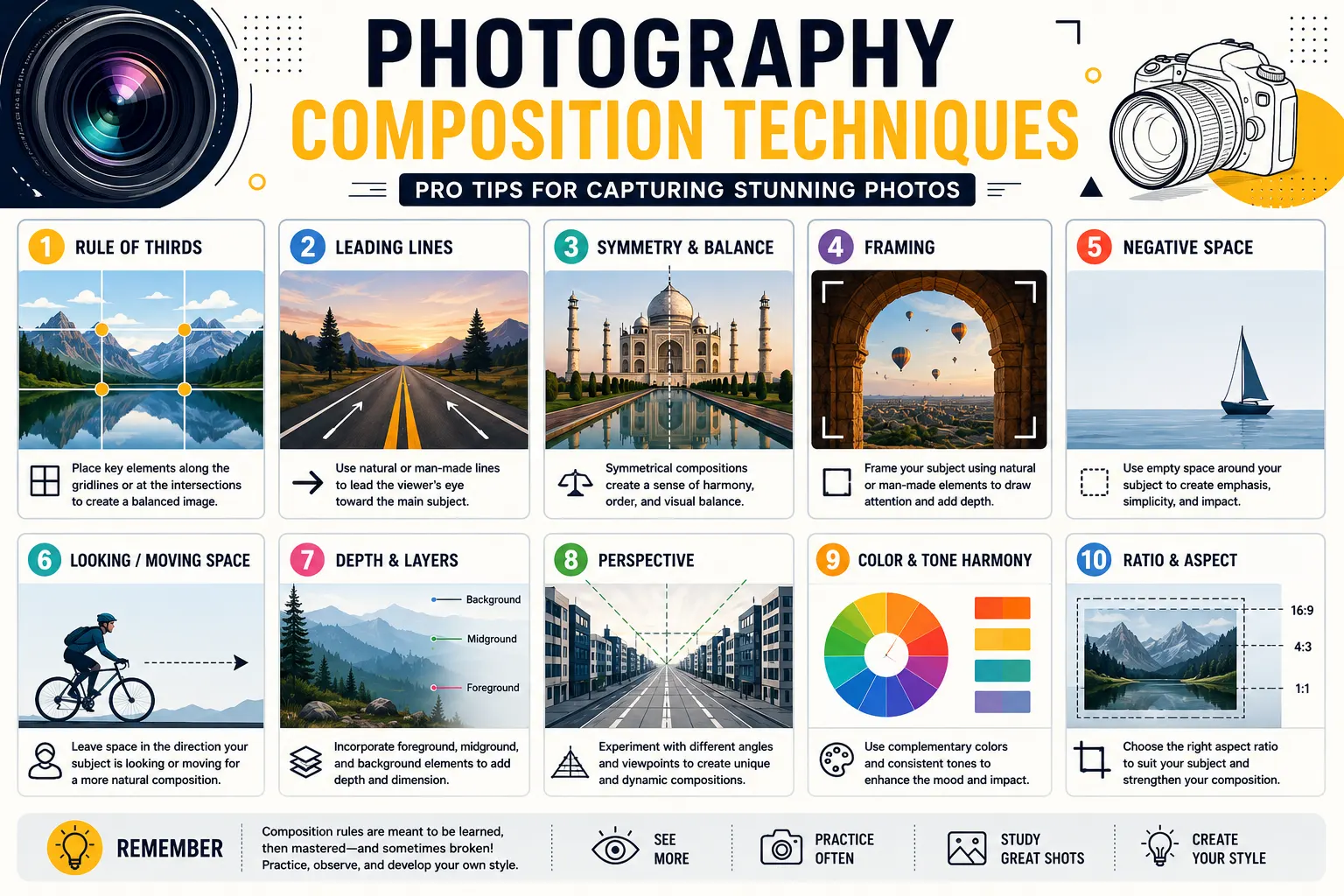
In photography, achieving a successful shot isn't just about using a high-quality camera. The most important element that elevates a photograph from ordinary to impressive is composition. Composition techniques in photography ensure the conscious placement of elements within the frame, directing the viewer's attention to the right point. Through the correct use of composition, both amateur and professional photographers can obtain stronger and more aesthetically pleasing images.
What is composition?
Composition is the arrangement of all elements within a photograph in a specific order. This arrangement, which supports the story the photograph aims to tell, helps the viewer perceive the photograph more effectively. A successful composition creates a striking result while maintaining visual balance.
Rule of Thirds
One of the most commonly used composition techniques in photography is the rule of thirds. In this technique, the frame is divided into three equal parts horizontally and vertically. The resulting intersection points determine the focal points of the photograph.
Placing important objects or subjects at these intersection points creates a more balanced and aesthetically pleasing image. The rule of thirds is particularly effective in landscape, portrait, and street photography.
Using Leader Lines
Leader lines are natural or artificial lines that direct the viewer's eye to a specific point within a photograph. Examples include the lines of roads, bridges, railways, rivers, or buildings.
This method adds depth to photographs and directs the viewer's gaze towards the main subject. Leader lines are frequently used in architectural and landscape photography.
Symmetry and Balance
The human eye naturally appreciates symmetrical images. The use of symmetry gives photographs a coherent and powerful appearance. Reflection photographs, architectural structures, and geometric patterns are examples of areas where symmetry is used most effectively.
In addition, visual balance is of great importance. If there is a dense object on one side of the frame, elements should be placed on the other side to balance this weight. This makes the photograph appear more harmonious.
Framing Technique
Framing is the technique of surrounding the main subject using natural or artificial elements. Doors, windows, tree branches, or arches can be used for this purpose.
Framing makes the photograph more striking by drawing the viewer's attention directly to the main subject. It also adds a sense of depth to the image.
Negatif Alanın Gücü
Negative space refers to the empty areas surrounding the main subject. Many photographers overlook the power of negative space while trying to fill the frame.
The conscious use of empty space makes the photograph appear simpler and more effective. The use of negative space is particularly important in minimalist photography. This technique brings the subject to the forefront and conveys the message more clearly.
Pay Attention to Gaze Direction and Movement Area
When photographing portraits or moving objects, it's necessary to pay attention to the gaze direction and movement area. Leaving space in the direction a person is looking or on the side where a moving object is moving makes the photograph look more natural.
Otherwise, the viewer may feel a cramped or incomplete image.
Creating Depth
To give photographs a three-dimensional feel, foreground, midground, and background elements can be used. The depth of field technique is particularly effective in landscape photography.
An object in the foreground helps draw the viewer into the photograph, making the shot appear more vibrant and impactful.
The Importance of Changing Perspectives
Constantly maintaining eye level while shooting can limit creativity. Using different angles and perspectives can make even ordinary scenes more striking.
Shooting from the ground, taking a picture from a high vantage point, or using different lenses adds originality to a photograph. Most successful photographers are not afraid to experiment with different perspectives.
Conclusion
In photography, composition techniques are fundamental to achieving impressive and professional-looking images. Techniques such as the rule of thirds, leading lines, symmetry, framing, negative space, and depth of field, when used correctly, significantly enhance the visual quality of photographs. Learning the rules of composition and practicing regularly plays a major role in developing photography skills. By consciously applying these techniques to each photograph, you can create more striking images with stronger storytelling potential.





No comments yet. You can leave the first one.