
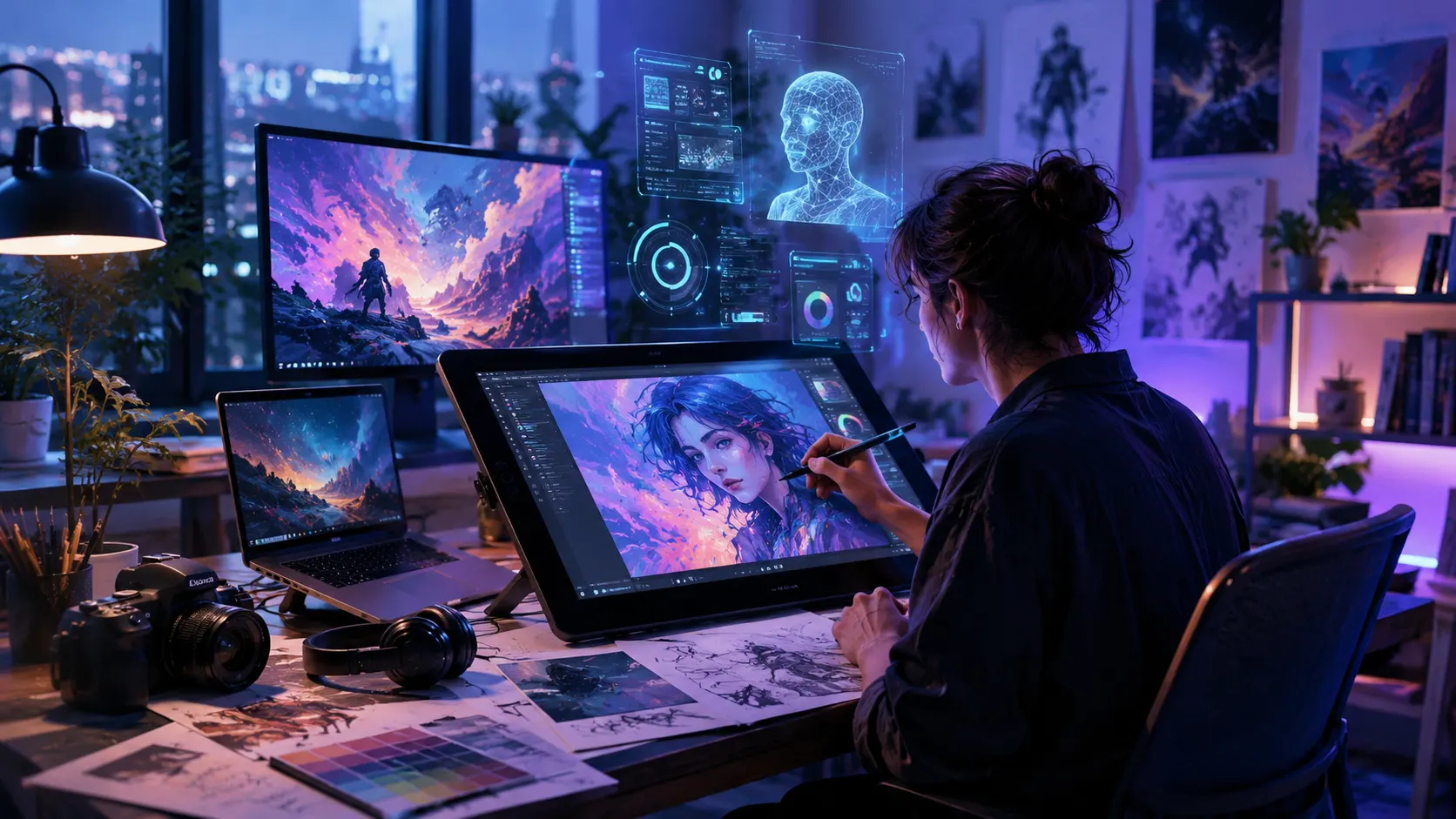
What Does It Mean to Be an Artist in the Digital Age?
Being an artist in the digital age means much more than creating works using traditional methods. Today, artists are exploring new forms of production through digital tools, social media platforms, online exhibitions, artificial intelligence applications, NFT systems, and interactive technologies. This transformation is reshaping both the creative process and the relationship between the artist and the audience.
In the past, artists needed direct connections with galleries, museums, or art communities to gain visibility. Today, however, an artist can share their work with people across the globe through digital platforms. While this offers greater freedom, it also brings increased competition and responsibility.
The Role of Digital Tools in Artistic Production
Being an artist in the digital age requires integrating technology into the creative process. Graphic tablets, digital drawing software, video editing tools, 3D modeling programs, sound design applications, and AI-powered tools provide artists with a wide range of possibilities.
Thanks to these tools, artists are no longer limited to physical materials. A work of art can take shape on a screen, in a virtual environment, through motion, sound, or audience interaction. As a result, art becomes a more dynamic and multi-layered experience.
However, the widespread use of digital tools does not diminish creativity. On the contrary, technology becomes a new medium through which artists express their ideas. What truly matters is not the tool itself, but what the artist communicates through it.
Social Media and Artist Visibility
One of the most powerful spaces for artists in the digital age is social media. Platforms such as Instagram, TikTok, YouTube, Pinterest, and Behance allow artists to reach wide audiences. Today, an artist can share a piece created in their studio with thousands of people within seconds.
Social media not only increases visibility but also offers opportunities for personal branding. An artist’s style, communication tone, story, and connection with the audience all become part of their digital identity.
However, this also comes with risks. The pressure to constantly post, the focus on likes, and the influence of algorithms can negatively affect artistic motivation. Therefore, being an artist in the digital age also requires using social media consciously and strategically.
Is Artificial Intelligence a Threat or an Opportunity?
In recent years, artificial intelligence has become one of the most debated topics in the art world. AI-powered visual generation tools can produce striking results in a short time. While some artists see this as a threat, it can actually serve as a powerful creative assistant when used correctly.
AI can accelerate the idea development process, offer alternative visual possibilities, and support experimental production. However, the meaning of AI-generated outputs still depends on the artist’s perspective, choices, and interpretation.
Being an artist in the digital age is not about blindly using AI, but about evaluating it critically, ethically, and creatively. The artist’s unique vision, emotions, and storytelling should always remain at the center.
Selling Art on Digital Platforms
Digitalization has also transformed how art is sold. Artists can now present their work through personal websites, online marketplaces, social media accounts, and digital collection platforms without relying solely on physical galleries.
This is especially advantageous for independent artists. They can build their own audience, communicate directly with buyers, and manage their creative process more freely. Digital prints, illustrations, digital files, video works, and NFT-based pieces are among the new revenue models.
However, selling art online requires more than just producing good work. Artists also need knowledge of digital marketing, portfolio presentation, copyright, and online communication.
The Artist’s Digital Identity
Being an artist in the digital age also means building a strong digital identity. An artist’s website, social media presence, online portfolio, and communication style all influence their professional visibility.
Digital identity is not just about showcasing artworks. It also includes the artist’s creative process, sources of inspiration, values, and perspective on art. Today, people are interested not only in the artwork but also in the story behind it.
For this reason, artists should develop an authentic, consistent, and genuine presence online. While imitation may attract attention in the short term, long-term success comes from finding and expressing one’s unique voice.
Advantages of the Digital Age for Artists
The digital age offers many new opportunities for artists. Reaching wider audiences, building international connections, participating in online exhibitions, creating digital portfolios, and collaborating across disciplines are just a few of these advantages.
Additionally, digital tools make experimentation easier. Artists can test different compositions, colors, forms, and ideas without worrying about physical materials. This makes the creative process more flexible.
In the digital age, an artist is no longer just a creator of artworks but also a content creator, storyteller, researcher, designer, and digital communicator.
Challenges of the Digital Age
Alongside opportunities come challenges. The vast amount of content produced in the digital world makes it harder to stand out. Artists may struggle to maintain their originality amid algorithms, trends, and fast consumption culture.
Moreover, issues such as unauthorized copying, misuse of digital works, and copyright violations pose significant challenges. Therefore, being an artist in the digital age also requires awareness of legal and ethical matters.
Another challenge is the pressure of speed. The expectation to constantly produce and share content can be exhausting. However, true creativity sometimes requires slowing down, reflecting, and embracing silence.
Conclusion
Being an artist in the digital age is a multifaceted process that combines technology with creativity. Artists now create not only with canvas and physical materials but also with digital screens, software, artificial intelligence, social media, and online platforms.
This transformation offers greater freedom, visibility, and creative possibilities. At the same time, it brings responsibilities such as maintaining originality, acting ethically, building a digital identity, and resisting the pressures of fast consumption culture.
Ultimately, being an artist in the digital age means using technological opportunities consciously while preserving human creativity, emotion, and unique perspective. Because even as technology evolves, the essence of art remains rooted in humanity’s desire to understand, interpret, and express the world.

No comments yet. You can leave the first one.