
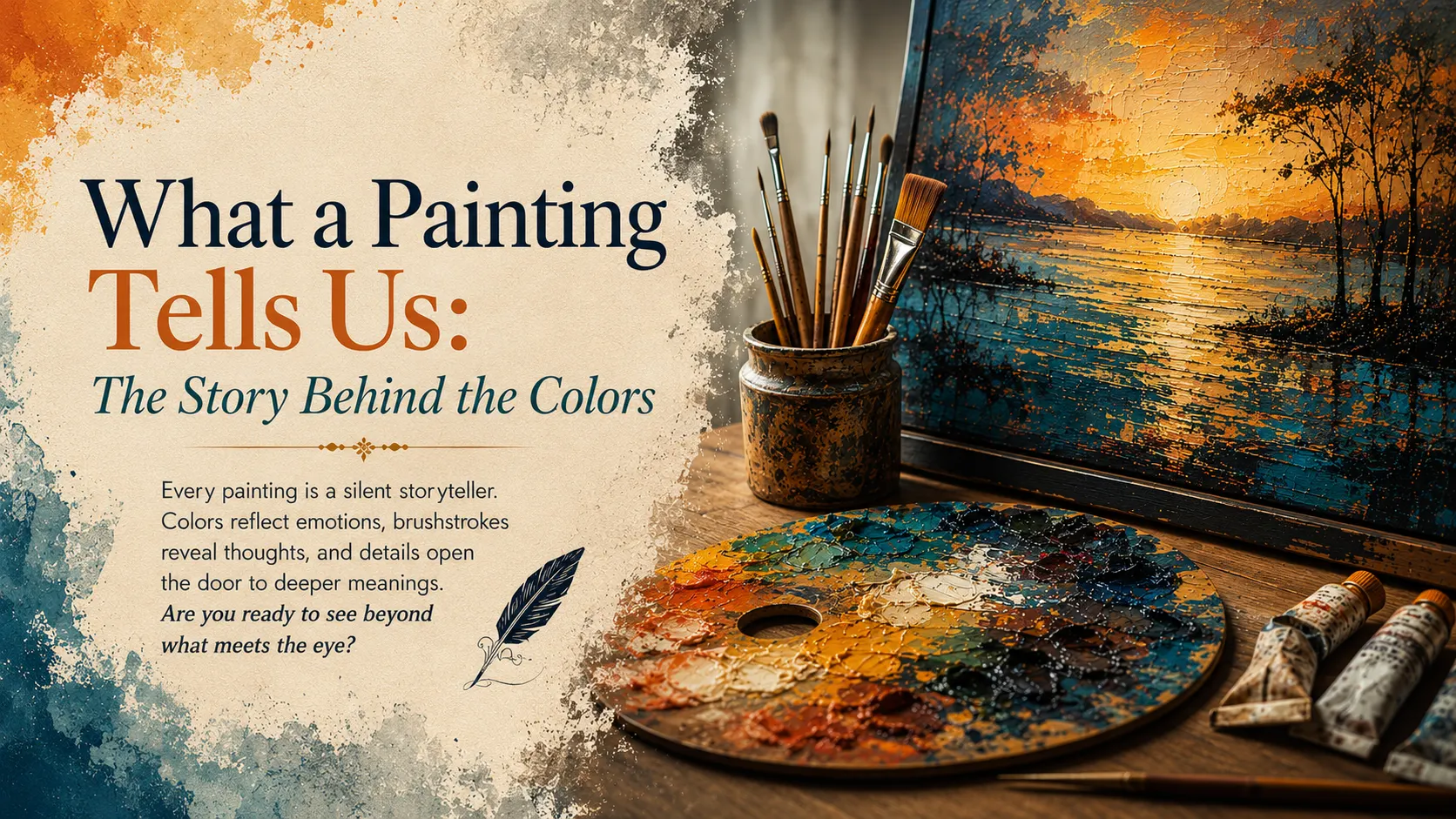
What a Painting Tells: The Story Behind the Colors
While wandering through an art gallery or museum, we often linger longer in front of some paintings than others. This isn't simply because the painting is aesthetically impressive. Sometimes a color, sometimes a glance, sometimes a small detail hidden within the composition draws us into the work. Because every painting tells a story beyond what is visible. These silent narratives, shaped by brushstrokes, invite the viewer into the artist's world while simultaneously confronting them with their own emotions.
Looking at art history, it's clear that paintings weren't created solely for decorative purposes. For centuries, painters have reflected the events of their time, social changes, personal experiences, and inner worlds in their works. Therefore, looking at a painting is often like reading a story. But here, instead of words, colors, light, and shadows speak.
The Silent Power of Colors
Colors have a powerful effect on human psychology. The color palette a painter uses determines the first impression the work will leave on the viewer. Warm tones generally create a sense of energy, passion, and movement, while cool tones can create a calm, solitary, or pensive atmosphere.
For example, a painting that heavily uses red can evoke strong emotions in the viewer. A work dominated by shades of blue can give a feeling of peace and tranquility. Yellow represents hope and vitality, while shades of gray can evoke melancholy. Of course, the meanings of colors can vary from culture to culture, but their emotional impact forms a universal language.
For a painter, color is not merely a visual element; it is also a means of expression. Sometimes, the artist can express what they want to say with a single color choice. Therefore, when trying to understand a painting, it is necessary not to ignore the messages conveyed by the colors.
Every Brushstroke Has a Reason
When a painting is carefully examined, it becomes clear that the artist has consciously placed every detail. The figure in the center of the composition, the objects in the background, the direction of the light, and even the empty spaces serve a specific purpose.
Some paintings may appear quite simple at first glance, but over time, different layers of meaning emerge. With each new glance, the viewer can discover details they hadn't noticed before. This is one of the most fascinating aspects of art. Because a good painting isn't an image consumed in a single viewing, but an experience reinterpreted with each encounter.
Artists sometimes prefer to use symbols rather than directly depicting their emotional processes. A window can represent freedom, while a solitary tree can illustrate a person's inner loneliness. Through these symbols, the painting establishes a silent dialogue with the viewer.
Paintings and Emotional Connection
One of the fundamental reasons a work of art is impactful is that people can find pieces of their own lives in it. Two people looking at the same painting can feel completely different things. A detail that one person sees as hope may mean longing for another.
This difference reveals the power of art. Because works of art don't have a single correct interpretation. Each viewer reshapes the work according to their own experiences, memories, and emotional accumulation. Thus, the painting not only tells the artist's story but also touches the viewer's story.
Sometimes, even a painting made years ago can resonate with the emotions of people today. This is because similar emotions are at the root of human experiences. Universal emotions such as love, loss, hope, fear, and longing constitute the timeless aspect of art.
Art's Ability to Reveal the Invisible
One of the most impressive qualities of art is its ability to make the invisible visible. Details we don't notice in daily life can take on a completely different meaning through the artist's perspective. An ordinary street scene, a flower, or a portrait of a person can transform into a profound story through the artist's interpretation.
When one looks at a painting for a long time, emotions and meanings that are not immediately apparent begin to emerge. This is precisely where the magic of art lies. Art tells not only what is seen but also what is felt. Therefore, paintings are silent; yet what they tell is often more powerful than words.
Conclusion
Looking at a painting is actually listening to a story. These stories, told through colors, lines, and composition, can carry different meanings for each viewer. Every time the artist touches the canvas with their brush, they don't just create an image; they also share their thoughts, feelings, and worldview.
Sometimes, all it takes is a little closer attention to discover the story behind the colors. Because every painting is a gateway to a world hidden beneath the surface. And when we open that door, we encounter the silent yet powerful narrative of art. Perhaps that's why some paintings continue to live on in people's memories, even years later.



No comments yet. You can leave the first one.