
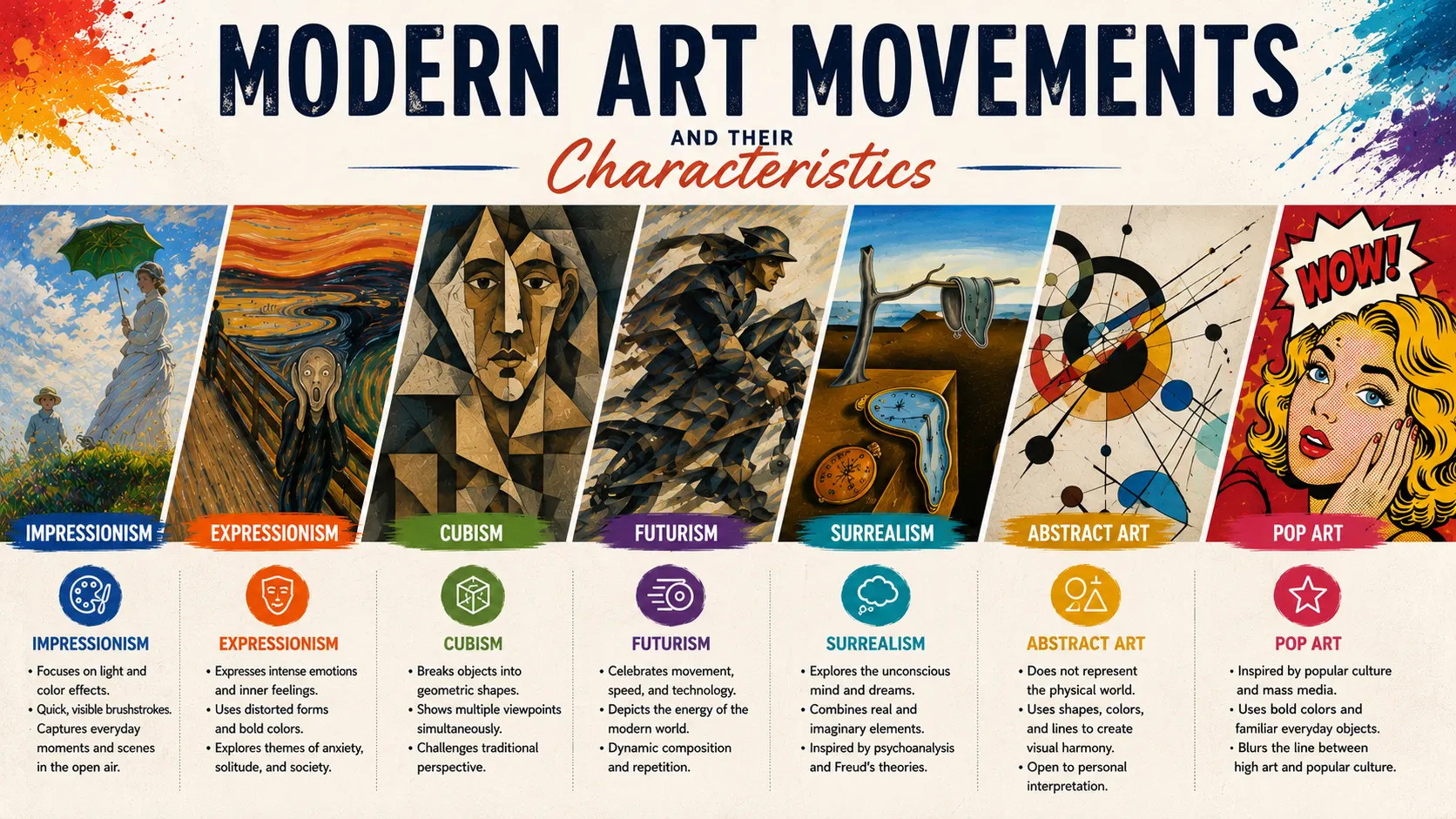
Art is one of the most important forms of expression reflecting the cultural structure of societies and the thought world of individuals. Modern art movements, which emerged especially from the late 19th century onwards, challenged traditional art understanding and redefined the boundaries of art. Many works we frequently encounter in art galleries, museums, and digital platforms today bear the influence of modern art. So, what are modern art movements and what are their characteristics? In this article, we will examine the prominent movements of modern art in detail.
What is Modern Art?
Modern art refers to the art understanding that developed from approximately the 1860s to the 1970s. During this period, artists moved away from classical rules and began to reflect their individual interpretations and innovative techniques in their works. The main aim of modern art is not to copy reality as it is, but to express the artist's feelings, thoughts, and observations in original ways.
Impressionism
One of the first major movements in modern art, Impressionism emerged in France at the end of the 19th century. Artists of this movement attempted to reflect nature and daily life through fleeting light effects.
Characteristics of Impressionism
* The effect of natural light is paramount.
* Fast and distinct brushstrokes are used.
* Scenes from daily life are frequently depicted.
* General impression is more important than detail.
Impressionist artists painted not the precise lines of objects, but the fleeting effects created by light and color.
Expressionism
Emerging at the beginning of the 20th century, Expressionism is a movement that emphasizes the artist's inner world and emotions. In this approach, individual feelings are more important than reality.
Characteristics of Expressionism
* Contains strong emotional expression.
* Exaggerated colors and forms are used. * It focuses on social issues and human psychology. * Realistic appearance is secondary.
Expressionist works often aim to evoke intense emotions in the viewer.
Cubism
Cubism is one of the most influential movements in modern art. Emerging in 1907, this movement aimed to show objects from different angles simultaneously.
Characteristics of Cubism
* Geometric shapes are prominent. * The understanding of perspective is altered. * Objects are broken down and reassembled. * Traditional painting rules are rejected.
Thanks to Cubism, a completely new visual language developed in the art world. This movement significantly influenced subsequent art movements.
Futurism
Futurism is an art movement that admires technology, speed, and the dynamism of modern life. It first emerged in Italy.
Characteristics of Futurism
* Movement and energy are emphasized. * Industrialization and technological advancements are the subject matter. * Modern city life is prominent.
* Dynamic compositions are used.
Futurist artists tried to reflect the speed and power of the changing world in their works.
Surrealism
Surrealism is an important modern art movement that places the subconscious and imagination at the center of art. It was influenced by Sigmund Freud's psychoanalytic studies.
Characteristics of Surrealism
* Dream and subconscious themes are explored. * Illogical scenes are created. * Imagination is prominent. * Symbolic expressions are frequently used.
Through this movement, artists have impressively transferred images that are impossible in the real world into their works.
Abstract Art
Abstract art aims to create meaning through color, line, and shapes instead of directly depicting objects. It is considered one of the freest interpretations of modern art.
Characteristics of Abstract Art
* Concrete objects may not be used. * Color and form are prominent. * It is open to the viewer's interpretation. * The artist's personal approach is evident.
Everyone can derive different meanings from abstract art works, and this is one of the most striking features of the movement.
Pop Art
Emerging in the 1950s, Pop Art made popular culture the subject of art. Advertisements, comics, and consumer culture are among the fundamental sources of this movement.
Characteristics of Pop Art
* Bright and striking colors are used. * Everyday objects are transformed into works of art. * Consumer culture is criticized or reflected. * Popular culture elements are frequently used.
Pop Art offered an innovative approach arguing that art is not only for the elite.
Conclusion
Modern art movements have led to radical changes in art history and have played a significant role in shaping today's understanding of art. From Impressionism to Abstract Art, from Cubism to Surrealism, each movement reflects the mindset and social dynamics of its time. Today, the innovative perspective brought by modern art is also at the heart of contemporary art. Understanding modern art movements is crucial for comprehending the constantly changing and evolving nature of art.





No comments yet. You can leave the first one.