
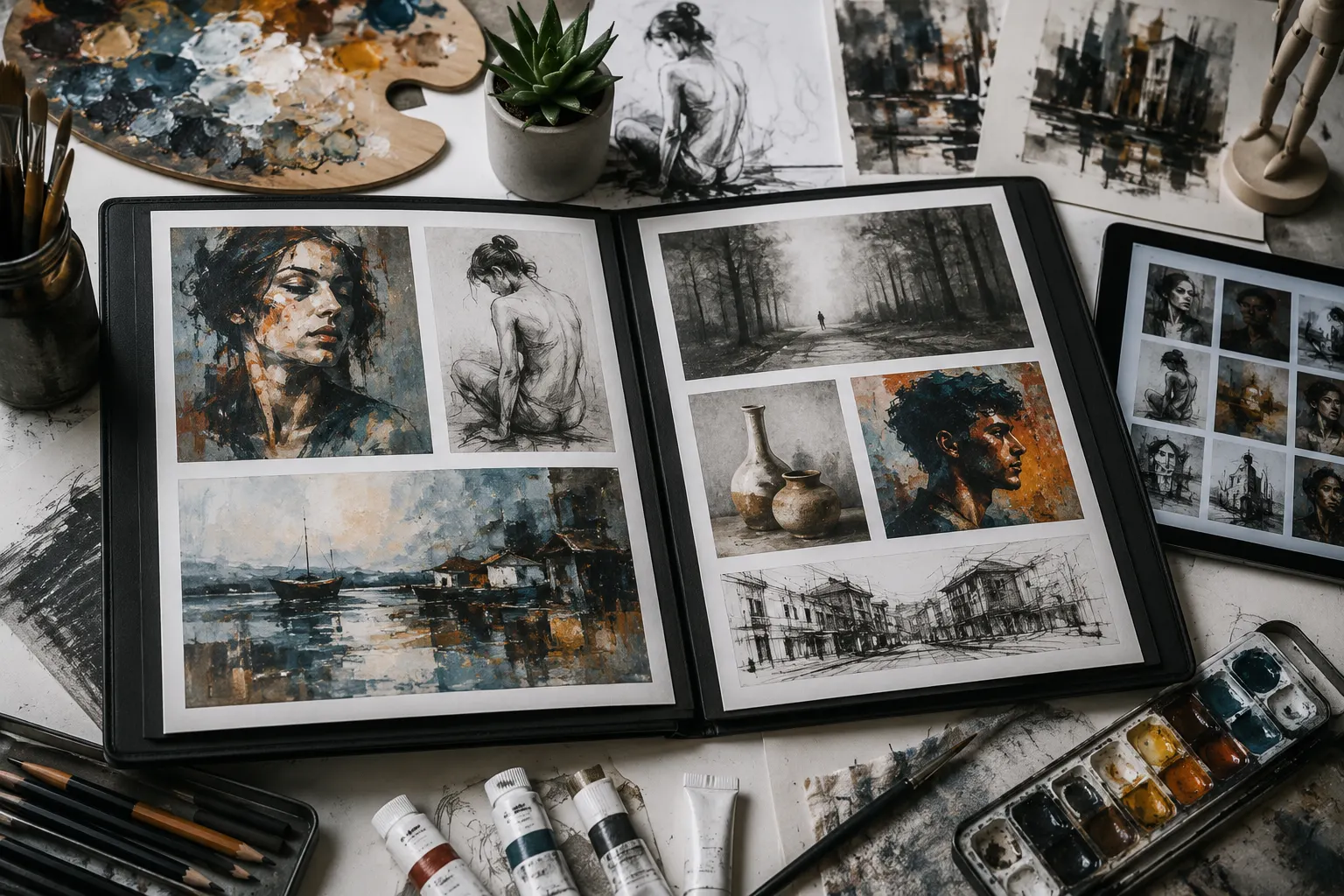
An art portfolio is one of the most important tools an artist creates not only to showcase their work, but also to express their artistic vision, creative process, and unique style. A well-prepared portfolio quickly communicates who the artist is, what they focus on, and how they approach their work.
So, how do you create an art portfolio? Which works should be selected, how should they be organized, and how should a portfolio be presented in a digital environment?
In this guide, we go step by step through the essential elements of building a professional artist portfolio.
What Is an Art Portfolio?
An art portfolio is a curated collection of an artist’s work presented in a structured and cohesive way. It may include paintings, sculptures, photography, illustration, graphic design, digital art, ceramics, or any other artistic discipline.
The purpose of a portfolio is not simply to display as many works as possible. Instead, it aims to clearly communicate the artist’s creative approach and artistic identity through a strong selection of works.
A good art portfolio should answer three key questions:
Who is the artist?
What kind of work do they create?
Which works best represent their artistic approach?
A successful portfolio allows viewers to quickly understand these answers.
How to Create an Art Portfolio
Creating an effective art portfolio is not just about gathering artworks. It requires careful consideration of selection, visual structure, descriptions, and how the artist presents their identity.
1. Define the Purpose of Your Portfolio
The first step is to determine why the portfolio is being created.
A fine arts student applying to a school may structure their portfolio differently than a professional artist applying to a gallery. An illustrator may focus more on client-oriented digital work.
A portfolio can serve different purposes such as:
art school applications
gallery or exhibition submissions
artist promotion
freelance work
client presentations
competition entries
online artist profile
Defining the purpose helps determine which works should be included.
2. Select Your Best Works
One of the most common mistakes in building an art portfolio is including every piece ever created.
A portfolio is not an archive. Instead of quantity, focus on selecting works that best represent you as an artist.
Ask yourself:
Does this work reflect my artistic vision?
Does it demonstrate my technical skills?
Does it fit visually with my other works?
Does it improve the overall quality of the portfolio?
Would I still include this piece if I created it today?
If the answer is no, the work may not belong in your portfolio.
3. Build a Cohesive Narrative
A strong artist portfolio should not feel like a random collection of unrelated works.
Creating a connection between pieces helps viewers understand your creative journey more clearly.
This cohesion can be based on:
theme
color
technique
material
composition
period
style of expression
For example, if your portfolio explores the relationship between nature and humans, grouping similar works together creates a stronger narrative.
How Many Works Should Be in a Portfolio?
The number of works depends on the purpose of the portfolio. However, the key principle is always quality over quantity.
Instead of 20–30 average works, 10–15 strong pieces can communicate your artistic identity much more effectively.
Especially in digital portfolios, viewers may not spend a long time reviewing every piece.
Therefore, always prioritize:
Quality > Quantity
How Should Works Be Ordered in a Portfolio?
The order of works significantly affects how the portfolio is perceived.
It is usually best to start with one of your strongest pieces. The first work creates the viewer’s initial impression.
Then, you can build a logical flow between works.
Example structure:
Strongest work
A similar theme or technique
A contrasting piece
A work showing variety
A continuation of a series
A strong closing piece
Ending with a strong work helps maintain a lasting impression.
Should Every Artwork Include a Description?
Not every piece requires a long explanation. However, brief information can be helpful, especially for concept-driven works.
An artwork description may include:
Title
Year
Technique
Dimensions
Materials
Short explanation
Example:
Title: Inside the Silence
Technique: Acrylic on canvas
Year: 2026
Size: 80 × 100 cm
Below this, a short paragraph can explain the concept behind the work.
The goal is not to over-interpret the artwork, but to provide context for the viewer.
How Should an Artist Biography Be Written?
A professional artist portfolio should include a short biography of the artist.
The biography should be clear and authentic. It may include education, artistic disciplines, themes, exhibitions, and notable projects.
However, instead of a long CV, it is more effective to present a concise artistic identity.
A biography may include:
Artist’s name
Education background
Art disciplines
Areas of interest
Artistic approach
Exhibitions and projects
Awards or selections
What Is an Artist Statement?
An artist statement is a short text where the artist explains their work and creative approach in their own words.
Unlike a biography, it answers the question:
“What do I create, and why do I create it?”
A good statement should be:
clear
original
understandable
free of unnecessary jargon
Instead of complex language, focus on expressing the core idea behind your work.
How to Create a Digital Art Portfolio
Today, artists need to present their work not only physically but also digitally.
A digital art portfolio allows artworks to be shared online with high-quality visuals and easy accessibility.
When creating a digital portfolio, consider the following:
Use high-resolution images
Ensure accurate color representation
Avoid excessive compression
Include titles and basic information for each work
Make it mobile-friendly
Keep the design clean and distraction-free
Include biography and contact information
Responsiveness across different devices is especially important.
Why Visual Quality Matters in an Online Portfolio
The way an artwork appears digitally directly affects the viewer’s first impression.
Low-resolution, poorly compressed, or incorrectly lit images can reduce the impact of even the strongest work.
Pay attention to:
proper lighting
balanced colors
sharpness
correct framing
perspective control
For physical artworks, avoid reflections when photographing surfaces. For digital works, ensure colors are displayed as accurately as possible.
Common Mistakes in Art Portfolios
Avoiding mistakes is just as important as building a strong portfolio.
Including Too Many Works
Too many pieces can make the portfolio feel cluttered rather than impressive.
Using Low-Quality Images
Even strong artwork loses impact if presented poorly.
Showing Everything at Once
A portfolio should not include every piece ever created. Only the strongest works should be featured.
Writing Long and Complex Descriptions
Keep descriptions short, clear, and meaningful.
Ignoring Visual Consistency
Inconsistent layouts or formats can weaken the overall presentation.
Advantages of Creating an Art Portfolio on ArtFlue
One of the biggest advantages of building a portfolio is having a centralized place to showcase your work.
ArtFlue provides artists with a platform to present their work digitally and reach a wider audience.
When creating an artist profile, it is important to think of it as a complete identity. A strong profile photo, a short biography, selected works, and a consistent presentation help viewers better understand the artist.
Art Portfolio Checklist
Before publishing your portfolio, review the following:
Is the purpose clearly defined?
Are the strongest works selected?
Are unnecessary works removed?
Is there a logical order?
Are images high quality?
Are titles included?
Are technical details provided?
Is the biography complete?
Is the artist statement included?
Are descriptions clear?
Is it mobile-friendly?
Is contact information available?
Is visual consistency maintained?
Conclusion: What Should a Good Art Portfolio Communicate?
A well-prepared art portfolio does more than display artwork. It reveals the artist’s aesthetic approach, technical skills, interests, and creative identity.
Therefore, the answer to how to create an art portfolio is not just about collecting works. It is about selecting the right pieces, building a coherent structure, presenting visuals professionally, and clearly communicating your artistic story.
Instead of including everything, choose the works that represent you best. Focus on visual quality, keep descriptions simple, and maintain consistency throughout the portfolio.
A well-crafted artist portfolio can help artists present their work more professionally and connect with new audiences, collectors, galleries, and opportunities.
No comments yet. You can leave the first one.